Republicans Say “We Will Have A Vote” on Voter ID
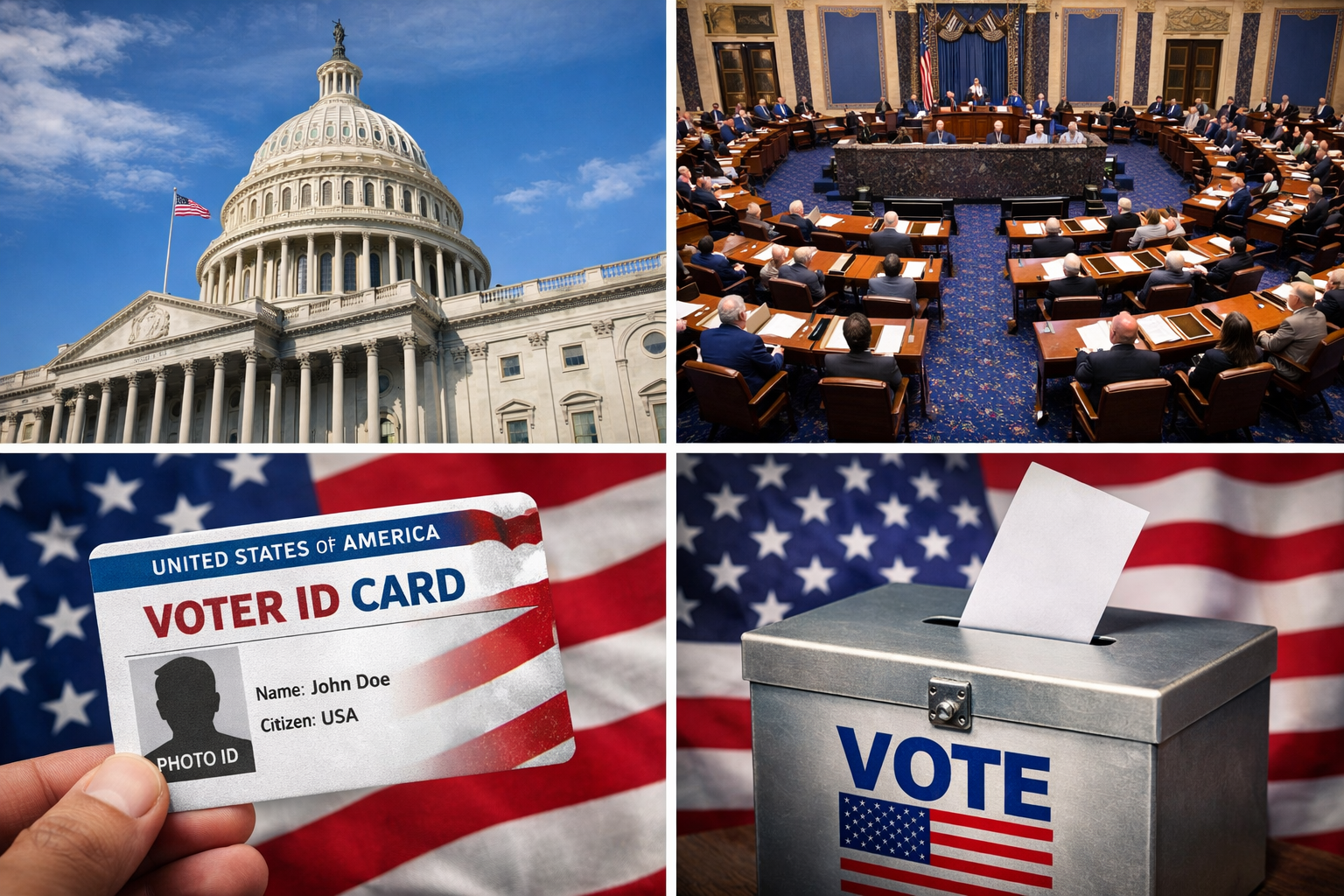
In a definitive statement that sets the stage for a major legislative confrontation, Senate Republican leadership has signaled that a debate and vote will occur in the upper chamber on a Trump-backed voter identification bill — even as Democrats promise to oppose it aggressively.
Senate Majority Leader John Thune (R-S.D.) told media that Republicans intend to bring the Safeguarding American Voter Eligibility (SAVE) America Act to the floor for consideration, asserting, “We will have a vote.”
The SAVE America Act, which passed the House of Representatives along party lines, would require documentary proof of U.S. citizenship for voter registration and a federally recognized photo ID before ballots could be cast in federal elections. The measure’s goals are straightforward for its sponsors: to strengthen election integrity and restore public confidence in the mechanics of voting.
Republicans argue this initiative reflects common-sense policies favored by a broad majority of Americans. Polling cited by GOP lawmakers shows strong nationwide support for voter ID requirements, though exact figures vary by survey.
Sen. Mike Lee (R-Utah) has been at the forefront of building support among Senate Republicans. With 50 GOP senators publicly backing the bill, the party has secured enough internal support to consider advancing the legislation procedurally — a significant threshold under Senate rules.
Yet the path forward is not assured. Under current Senate practice, most major bills require 60 votes to overcome a filibuster and reach final passage. While Republicans have the internal numbers to force a procedural debate, they lack the 60-vote supermajority needed to clear that hurdle without modifying or bypassing filibuster rules.
Some Republican lawmakers have openly discussed using alternative procedures, such as a “talking filibuster,” to advance the legislation — but Thune and other leaders have stopped short of committing to eliminating the 60-vote requirement altogether.
Senate Republican strategist Tom Emmer (R-Minn.) has seized on Democratic opposition as evidence of a double standard, noting that Democrats themselves enforce strict ID requirements in their own party contexts while blocking similar reforms at the federal level.
At the same time, Republicans are emphasizing the bill’s conservative underpinnings. Supporters frame the SAVE America Act as a necessary guardrail against even the appearance of unlawful voting — and as a measure that protects the value of every American’s ballot by ensuring only eligible citizens participate in federal elections.
While GOP senators argue the legislation enhances election security, legislative opponents liken the proposal to a federal overreach that could impede voter access for citizens without the specific documents mandated under the bill. Senate Minority Leader Chuck Schumer (D-N.Y.) has repeatedly denounced the proposal, calling it “Jim Crow 2.0” and pledging to block its progress.
Schumer’s use of historically charged language underscores how deeply divided lawmakers are on the issue. Democrats warn that the requirements could disenfranchise millions — particularly those who lack ready access to passports or other qualifying documents.
Yet Republican supporters counter that current state voter registration systems already demand proof of identity, and that adding federal standards simply strengthens what many voters expect. They also point to long-standing concerns among conservative constituencies about potential weaknesses in election administration and safeguards against non-citizen participation.
In the House, the SAVE America Act cleared the chamber on a 218–213 vote, with only one Democrat crossing party lines in support. That bipartisan breach — however isolated — is being highlighted by GOP leaders as evidence that the issue transcends simple party orthodoxy and resonates with some across the aisle.
The vote in the Senate, should it occur, is expected to become a flashpoint ahead of the midterm elections, with both parties likely to use the outcome as a campaign talking point. For Republicans, advancing the bill signals a commitment to election security and federal oversight of voter qualifications. For Democrats, blocking it is positioned as a defense of voter access and decentralized election control.
As this legislative drama unfolds, the broader electorate is watching closely, particularly in battleground states where election procedures and voter confidence are perennial campaign issues.
Republican leaders continue to express confidence that they will have a recorded Senate vote on voter identification — fulfilling their pledge to put election integrity at the center of the national legislative agenda.

I really like your writing style, good info, thanks for putting up :D. “Every moment of one’s existence one is growing into more or retreating into less.” by Norman Mailer.
SEO продвижение молодого сайта через гостевые публикации — это безопасно или рискованно?
Как выглядит дорожная карта при работе по модели SEO продвижение под ключ?
Как поведенческие факторы влияют на продвижение сайта в поисковых системах?
Может ли неправильная seo оптимизация сайта привести к санкциям поисковика?
Respect to website author, some great entropy.
Как SEO продвижение под ключ учитывает конкурентов при разработке стратегии?
Какие вопросы задать на первой встрече перед тем, как seo продвижение заказать?
В каких нишах лучше всего работает продвижение сайта с оплатой за результат?
Сколько стоит продвижение сайта в топ 10 в конкурентной нише?
Сколько стоит заказать продвижение сайта для небольшого регионального бизнеса?
Топ seo продвижение в узкой нише — реально ли добиться его с небольшим бюджетом?
Как понять, завышена ли цена на услуги seo продвижения?