AOC Cited for Basic Geography Errors at Munich Security Conference
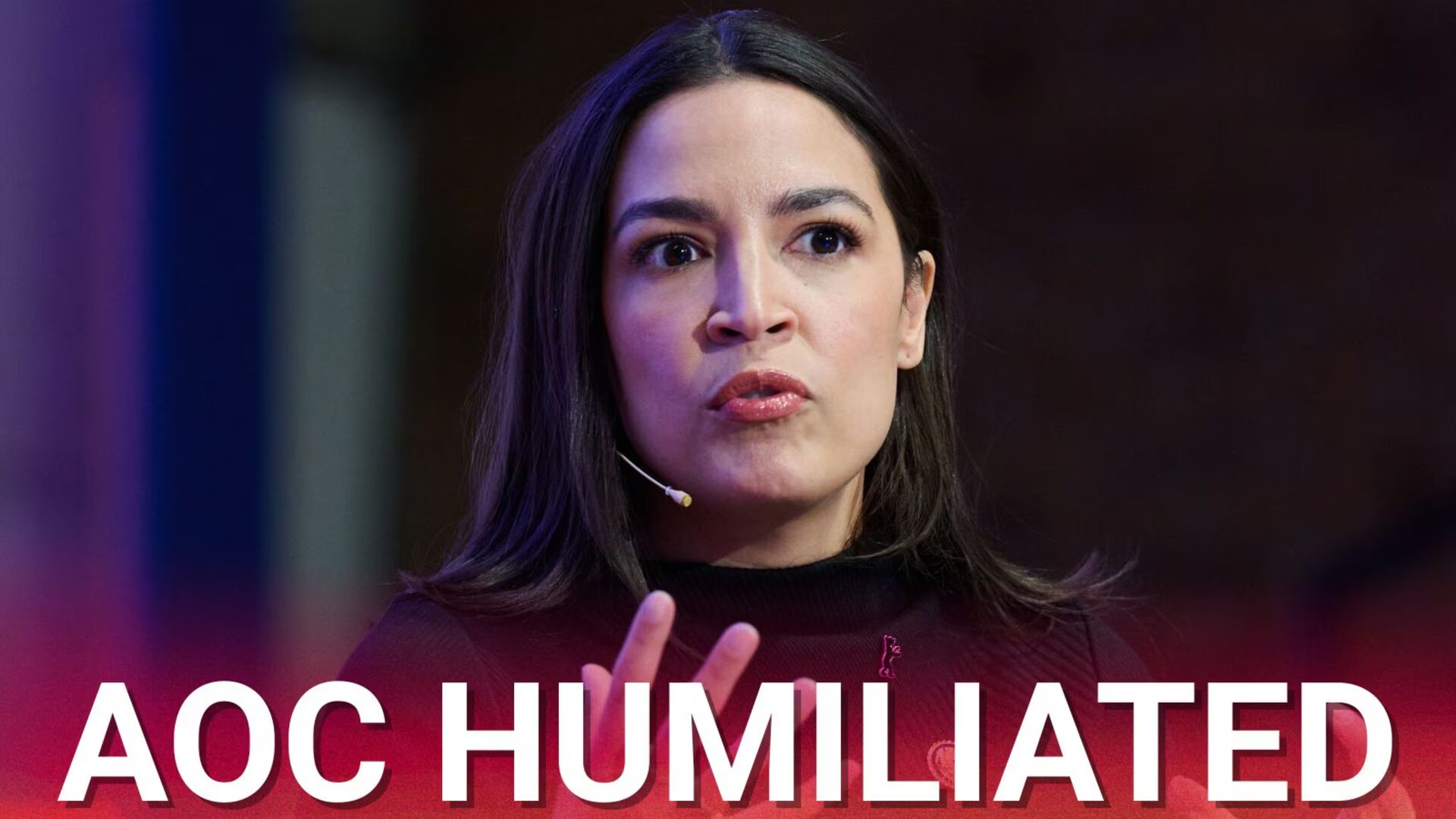
Representative Alexandria Ocasio-Cortez, D-N.Y., faced unusually intense ridicule from political opponents and social-media commentators last weekend after a high-profile appearance at the Munich Security Conference devolved into a series of gaffes that cast doubt on her foreign policy acumen.
What was intended as an effort to build a foreign-policy résumé ahead of potential national ambitions instead became fodder for conservative critics who seized on the congresswoman’s misstatements and stuttering responses to basic questions from international journalists.
Geographical Error Sparks Backlash
Perhaps the most striking moment occurred on Sunday during remarks about U.S. policy toward Venezuela. In a discussion at a TEDx event in Berlin tethered to the broader Munich gathering, Ocasio-Cortez asserted that the U.S. should not justify intervention or aggressive actions “just because the nation is below the equator.”
Here’s that moment as shared on X (formerly Twitter):
❗ AOC just referred to Venezuela as below the equator:
📹 Embedded X post:
The factual geographic record, however, contradicts her statement: Venezuela lies entirely north of the equator, a fundamental point of physical geography that is easily verifiable and often taught in introductory world geography courses.
Republican commentators, conservative pundits, and even some international observers seized on the error, using it to question her credibility on global issues and her preparedness to speak on matters of foreign policy.
Questions on China, Taiwan Draw Further Criticism
Ocasio-Cortez also attracted attention during an exchange with a moderator about potential U.S. defense commitments to Taiwan in the event of a Chinese attack. Instead of delivering a clear position, she responded in a hesitant, circuitous manner that further frustrated commentators who expected a straightforward answer on a critical strategic issue.
This exchange was published widely across social platforms as emblematic of her difficulties articulating a coherent stance on security partnerships and alliance commitments.
📹 Video clip – AOC struggles with Taiwan defense question:
Several voices on social media mocked her phrasing and delivery, with some describing it as reminiscent of a “beauty pageant” or “word salad” rather than diplomatic engagement.
Foreign Policy Savvy Under Scrutiny
These instances drew widespread conservative commentary, with critics suggesting that they illuminate a broader pattern of unpreparedness on issues traditionally considered the purview of seasoned legislators or diplomats. Analysts pointed out that the Munich Security Conference is a premier forum for discussion among heads of state, defense ministers, and foreign policy experts — not a venue for underdeveloped foreign policy statements.
Republican commentator Nick Sortor wrote on X, “AOC has AGAIN made a fool out of herself on stage saying that we can’t capture leaders like Maduro just because the nation is south of the equator — NONE of Venezuela is south of the equator. PLEASE run in 2028, AOC.”
Another conservative voice, Senator Bernie Moreno (R-Ohio), chimed in: “Wokeness is truly a mind virus,” he wrote, while criticizing her errors and the applause she reportedly received at the event.
Allies’ Absence, Canceled Media Appearances
Unlike other U.S. lawmakers at the Munich conference — including bipartisan delegations from the Senate — Ocasio-Cortez did not appear alongside officials such as Secretary of State Marco Rubio in diplomatic engagements. According to some reports, the congresswoman canceled a series of scheduled media appearances following the backlash, and she received scant defense from prominent members of her own party.
While domestic politics in the U.S. continue to be fraught with partisan conflict, foreign audiences often gauge policymakers on their mastery of geography, history, and strategic clarity. This misstep has left some foreign policy watchers questioning her readiness to lead conversations on international security.
Context: Munich Security Conference Setting
The Munich Security Conference brings together leaders from across the globe to discuss security challenges, alliance commitments, and geopolitical tensions. Attendance by major U.S. senators and diplomats underscores the importance placed on transatlantic cooperation. By contrast, Ocasio-Cortez’s participation was seen by many as a bid to elevate her foreign policy profile ahead of what some observers speculate could be a 2028 presidential bid.
This speculation was amplified when, during one of her comments, she did not rule out running for president in 2028 — despite the negative attention her performance generated.
Conservative Response and Broader Implications
Conservative commentators have used this episode to raise broader concerns about the Democratic Party’s foreign policy thinking, suggesting that its influential voices on the left lack the grounding necessary to navigate complex global issues.
Critics argue that such missteps not only damage Ocasio-Cortez’s credibility but also risk diminishing U.S. standing in forums where allied trust and strategic competence are paramount.
Whether this episode will influence her political future remains to be seen, but for now, the misreported equatorial geography and the hesitant handling of security questions have provided fodder for critics across the political spectrum.
-
AOC Embarrassed on World Stage: Geography Fail
-
Munich Gaffe: AOC Says Venezuela Below Equator
-
Security Conference Chaos: AOC Struggles on Foreign Policy
Keywords
-
AOC geography error
-
Munich Security Conference
-
Venezuela equator mistake
-
U.S. foreign policy credibility
-
Conservative backlash
-
Alexandria Ocasio-Cortez gaffe
-
Taiwan defense question
-
Global stage criticism
-
2028 presidential speculation
-
Social media mockery
-
Republican commentators