Trump Issues Stern Warning in Nancy Guthrie Abduction Case
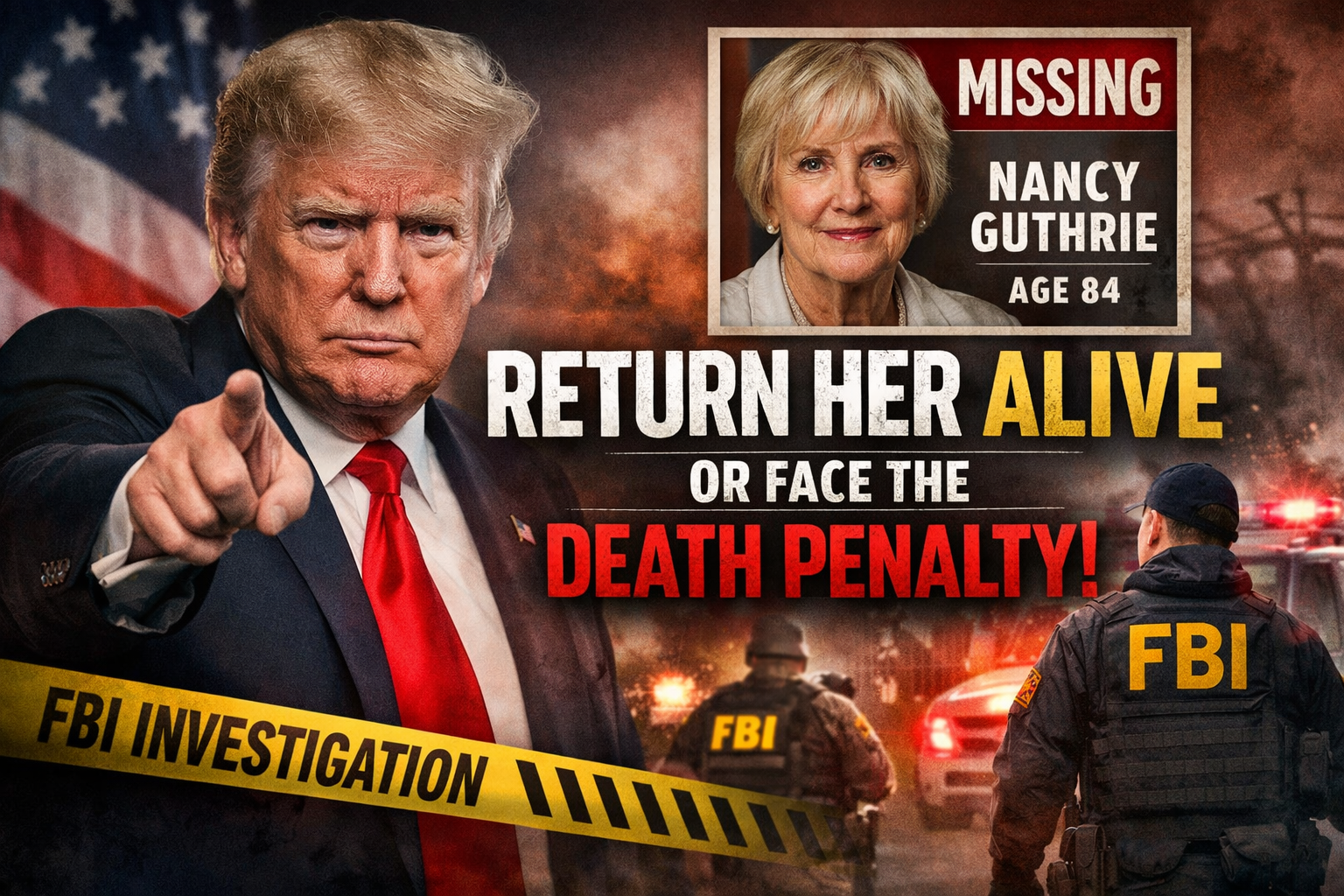
President Donald J. Trump issued a forceful admonition Monday to the individuals responsible for the abduction of 84-year-old Nancy Guthrie, warning unequivocally that federal authorities would pursue the death penalty if she is not returned alive.
In an exclusive telephone interview with the New York Post, Mr. Trump said he would direct the U.S. Department of Justice to seek the harshest possible consequences available under federal law should Guthrie be harmed or killed. When pressed specifically about capital punishment, the President responded, “The most, yeah — that’s true,” underscoring the severity of his stance.
The explicit promise of maximum punishment for violators represents a stark escalation in one of the most closely watched criminal investigations of early 2026 — a case marked by national media attention and an expansive FBI effort to locate Guthrie.
Nancy Guthrie, a resident of suburban Tucson, Arizona, vanished from her home in Catalina Foothills in the early hours of February 1. Authorities have treated the disappearance as a kidnapping since evidence at the scene — including blood matching Guthrie’s DNA and tampered video surveillance — strongly suggests forcible removal from the residence.
Federal agents, local law enforcement, and the Pima County Sheriff’s Department have pursued every credible lead in the ongoing search. Recent investigative developments include the recovery of a glove believed to match one seen in surveillance footage of a masked person near Guthrie’s door shortly before her disappearance. That glove is now undergoing DNA analysis.
To bolster these efforts, the FBI has doubled its reward to $100,000 for actionable information leading to Guthrie’s whereabouts or the identification of her captors. Despite this, no arrests have been made, and the suspect or suspects remain at large.
In a striking public plea, NBC “Today” co-anchor Savannah Guthrie — Nancy’s daughter — has repeatedly taken to social media to urge whoever holds her mother to come forward and provide proof of life. Her heartfelt statements have resonated across platforms, drawing sympathy from viewers and reinforcing the urgency of the case.
Trump’s warning arrives after weeks of high-profile media coverage and bipartisan frustration over the lack of definitive progress in the investigation. While Arizona is one of the states that still allows capital punishment, executions are rare, and the state’s own methodical legal process could take years to culminate in an actual death sentence. Federal prosecution, however, could circumvent some of these delays and apply more immediate pressure.
By invoking the death penalty at the federal level — a move requiring DOJ approval and significant legal scrutiny — the Trump administration signals a tougher approach to violent crime than seen in recent years. Federal statutes impose strict penalties for kidnappings that cross state lines or involve interstate activity, a threshold that may be relevant if evidence shows a broader criminal enterprise.
White House allies framed the announcement as both a moral imperative and a deterrent. “To harm an elderly, vulnerable victim is unconscionable,” a senior administration official told reporters, emphasizing that all available resources are being marshaled to bring the perpetrators to justice. Law enforcement officials, while careful not to comment directly on the death penalty threat, echo the commitment to exhaustive pursuit of leads.
Investigators continue to piece together a timeline of Guthrie’s disappearance, relying on forensic evidence, digital clues, and public assistance. Sheriff Chris Nanos of Pima County has denied speculation about family involvement, instead urging the public to focus on verifiable details rather than conjecture. The sheriff’s office has also stressed that while ransom notes have circulated in media accounts, there has been no confirmed contact with the kidnappers themselves.
The intense public focus on this heartbreaking case underscores broader questions about federal versus state authority in prosecuting violent crimes. In recent years, debates over criminal justice policy have intensified, with some critics arguing that too many serious offenders evade swift justice under current statutes. The Trump administration’s readiness to pursue the federal death penalty in this instance represents a clear departure from more cautious approaches that have prevailed elsewhere.
As the search presses forward, law enforcement officials encourage anyone with credible information to contact the FBI tip line. They warn that false leads or unverified theories can hinder the investigation — a caution echoed by victim advocacy groups who stress that community cooperation must be guided by facts, not speculation.
The nation watches closely, with many hoping that the combination of federal resources, public attention, and legal pressure will ultimately lead to Nancy Guthrie’s safe return. For her family, every passing hour without answers intensifies the pain — and sharpens the resolve of both loved ones and elected officials alike.