

Chasing Eden | Real Food. Real Health. God’s Design.
Sugar is everywhere.
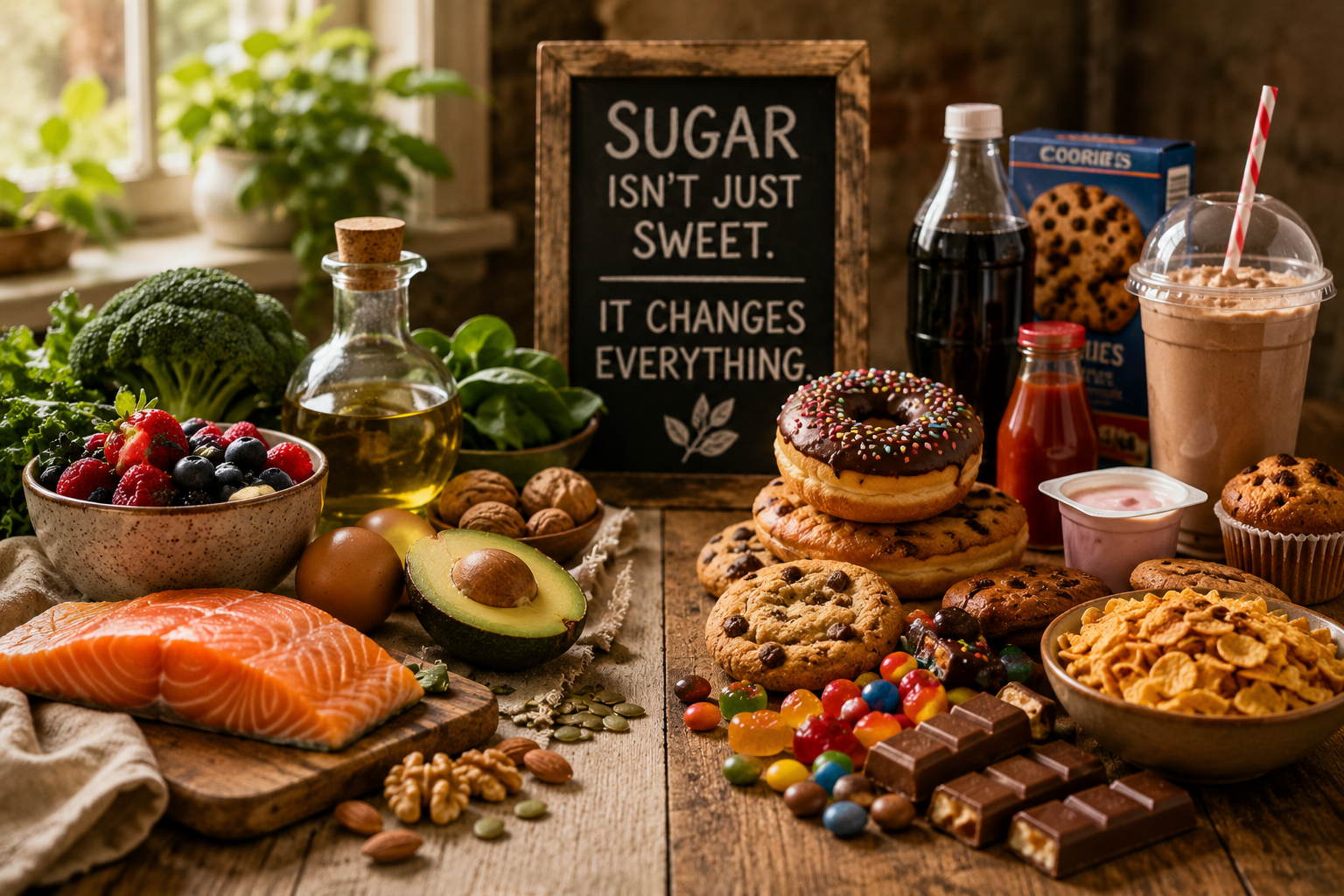
It’s in the obvious places—the soda, cookies, candy and ice cream—but it’s also hiding in breakfast cereals, flavored yogurt, coffee drinks, sauces, granola bars and foods many people would never describe as dessert.
And that may be the real problem.
For most people, the occasional piece of birthday cake isn’t the issue. The bigger question is what happens when added sugar stops being an occasional pleasure and quietly becomes part of breakfast, lunch, dinner and everything in between.
The American Heart Association says Americans age two and older currently get about 12%–13% of their calories from added sugars, substantially above its recommendation of no more than 6%. Its guideline for most women is no more than about 6 teaspoons, or 25 grams, of added sugar per day, and about 9 teaspoons, or 36 grams, for men.
And consider this: a single 12-ounce regular soda can contain roughly 10 teaspoons of added sugar.
So what is all that sugar actually doing once it enters the body?
It Starts in the Bloodstream
When we eat carbohydrates, our digestive system breaks many of them down into glucose. Glucose itself isn’t the enemy. Our bodies use it for energy.
The problem is how much, how quickly and how often.
Compare an apple with a soft drink.
An apple contains naturally occurring sugar, but it also comes packaged with fiber and nutrients. That fiber slows digestion and the absorption of its sugars. A sugary drink delivers a large amount of sugar rapidly without the same fiber structure.
As blood glucose rises, the pancreas releases insulin, which helps move glucose out of the bloodstream and into cells where it can be used or stored.
That’s an extraordinary biological system.
But repeatedly flooding that system with large amounts of rapidly absorbed sugar is very different from occasionally eating something sweet.
The Insulin Roller Coaster
Imagine eating a sugary breakfast.
Blood glucose rises.
Insulin responds.
A few hours later, you may be hungry again—and another sweet snack or sweetened drink starts the process over.
The concern isn’t one isolated spike. It is the dietary pattern that can develop over years.
According to the American Heart Association, when blood glucose repeatedly rises, the pancreas repeatedly produces insulin to bring it down. Over time, excess calorie intake can contribute to weight gain, while impaired insulin sensitivity can become part of the pathway toward Type 2 diabetes.
This is why Chasing Eden isn’t about fearing food.
It’s about understanding it.
Added Sugar and Natural Sugar Aren’t the Same Eating Experience
Here’s an important distinction that often gets lost online.
Fruit contains sugar.
That doesn’t make an apple equivalent to a cola.
Whole fruit comes with fiber, water, vitamins, minerals and other compounds. The physical structure of the food changes how we consume and digest it.
Added sugars, meanwhile, are sugars or caloric sweeteners introduced during preparation or processing. They include familiar ingredients such as table sugar as well as honey, syrups, fruit juice concentrates, dextrose and high-fructose corn syrup.
That doesn’t mean honey is poison or fruit is unlimited.
It means context matters.
Real food tends to come packaged very differently from manufactured food.
Your Heart Notices Too
The consequences of excessive added sugar aren’t confined to blood glucose.
A diet consistently high in added sugars can also make it harder to maintain a healthy weight and dietary pattern, and excess intake—particularly through sugar-sweetened beverages—has been associated with cardiovascular and metabolic disease.
This is one reason the American Heart Association recommends minimizing added sugars and emphasizing whole and minimally processed foods.
And this brings us to one of the central ideas behind Chasing Eden:
Food isn’t merely calories.
Food carries protein, fiber, fats, vitamins, minerals and thousands of naturally occurring compounds. Looking only at the calorie number can obscure the larger nutritional picture.
The Most Dangerous Sugar May Be the Sugar You Don’t Notice
Most of us know a doughnut contains sugar.
The bigger surprise comes from products marketed as ordinary—or even healthy.
Added sugars can show up in:
sweetened yogurt, breakfast cereals, granola and protein bars, bottled coffee, flavored drinks, sauces, breads, salad dressings and many other packaged foods.
That’s why one of the simplest changes you can make doesn’t require a new diet program.
Turn the package around.
Look at the Nutrition Facts panel.
Find:
Added Sugars.
Then look at the ingredient list.
Sugar doesn’t always appear under the word sugar. The AHA lists names including corn syrup, fruit juice concentrates, high-fructose corn syrup, honey, molasses, malt sugar, dextrose, glucose and sucrose.
Once you start looking, you’ll probably be surprised by how frequently it appears.
So Should We Never Eat Sugar?
No.
That isn’t the message.
A healthy life shouldn’t require becoming terrified of birthday cake.
There’s an enormous difference between occasionally enjoying something sweet and allowing added sugar to become the foundation of your everyday diet.
The goal isn’t perfection.
The goal is awareness.
Instead of asking:
“Can I ever eat this?”
Try asking:
“Is this an occasional treat—or has it quietly become a daily habit?”
That’s a much more useful question.
Start With the Biggest Offender
If you want to reduce added sugar, don’t overhaul your entire kitchen tonight.
Start with beverages.
Sugar-sweetened beverages are the largest single source of added sugars in the American diet, accounting for roughly 24% of added-sugar intake according to the American Heart Association.
That means replacing one habitual soda, sweet tea, energy drink or heavily sweetened coffee may accomplish more than obsessing over tiny amounts of sugar elsewhere.
Then move toward foods that look more like food:
eggs, vegetables, fruit, beans, nuts, meat, fish, plain dairy and minimally processed grains, depending on your individual needs and preferences.
Not because every packaged food is bad.
Because the closer we get to recognizable food, the easier it often becomes to understand what we’re actually eating.
Chasing Eden: A Different Question About Health
Modern nutrition culture tends to swing between extremes.
One year fat is the enemy.
Then carbohydrates.
Then meat.
Then seed oils.
Then gluten.
Then sugar.
Chasing Eden is interested in a different question:
What happens when we stop chasing every new diet trend and begin rediscovering the fundamentals of real food and intentional living?
Our bodies are remarkably sophisticated. Hunger, digestion, hormones, metabolism and energy regulation are interconnected systems—not isolated numbers on a calorie counter.
We don’t need to fear those systems.
We should learn how to work with them.
And perhaps that’s where the journey toward better health really begins—not with another fad diet, but with becoming curious about what we put into our bodies every day.
Real Food. Real Health. God’s Design.
Watch & Listen
This article is part of our ongoing Chasing Eden series exploring food, natural health and intentional living.