

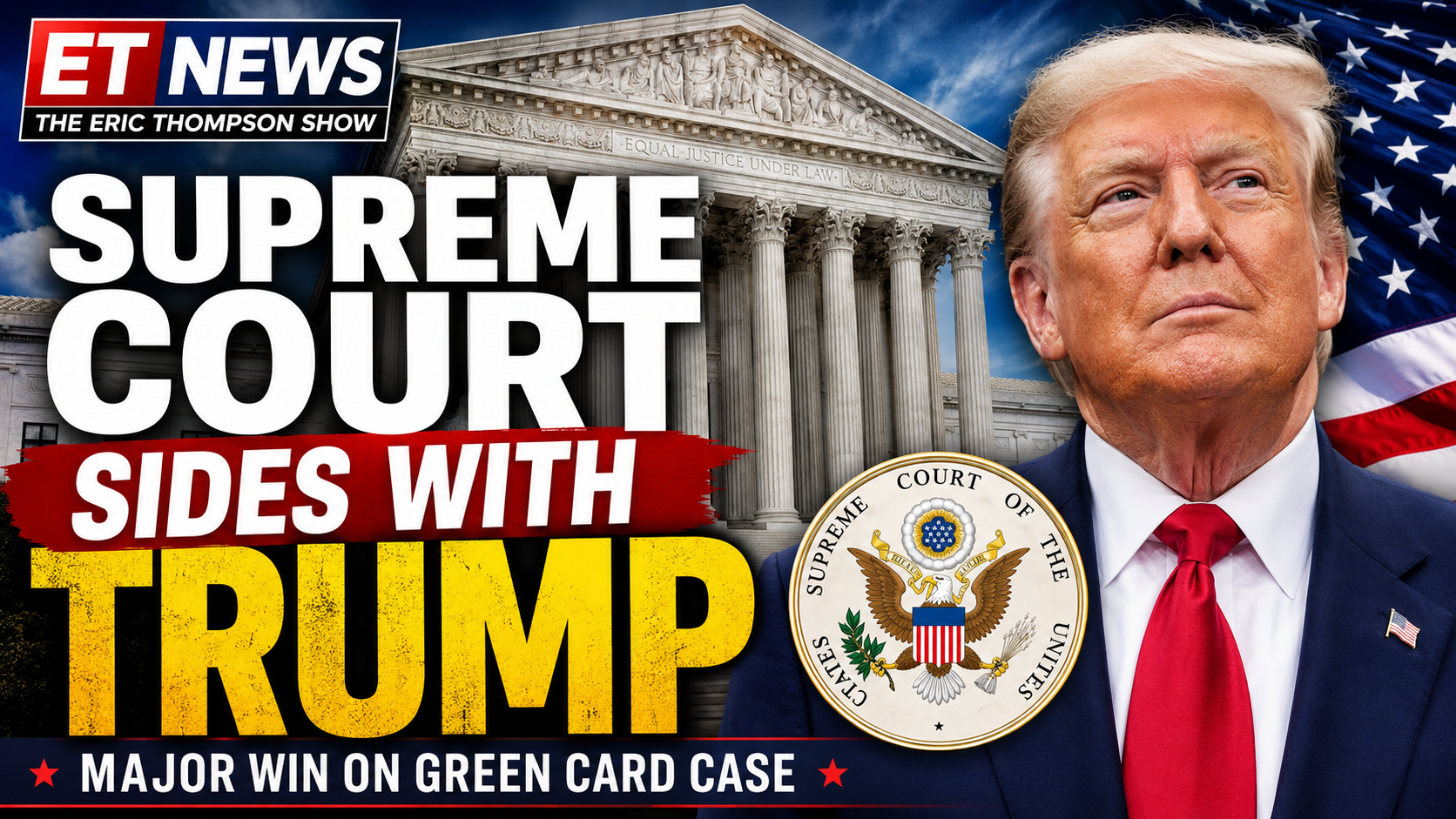
Supreme Court Backs Trump Administration on Green Card Case
The U.S. Supreme Court handed the Trump administration another major victory this week, ruling 6-3 in favor of the federal government’s authority in an immigration case involving lawful permanent residents, commonly known as green card holders.
The case centered on Muk Choi Lau, a permanent resident who returned to the United States after a trip abroad in 2012. Immigration officials treated Lau as an applicant seeking admission because he had been accused of a counterfeiting offense. That decision ultimately led to a years-long legal battle over how much authority border officials possess when dealing with green card holders who are suspected of criminal activity.
Lau argued that overstepped the officer’s authority, and the decision wrongly allowed the U.S. Department of Homeland Security to swiftly begin deportation proceedings after he pleaded guilty to selling counterfeit clothes in New Jersey.
In a majority opinion written by Justice Clarence Thomas, the Court ruled that immigration officials did not need to first establish with “clear and convincing evidence” that a green card holder had committed a crime before treating the person as seeking admission into the country. The ruling gives the federal government broad authority in such cases and reverses lower court decisions that had imposed a higher burden of proof on immigration authorities.

The decision was supported by the Court’s six conservative justices. Justice Ketanji Brown Jackson authored a dissent joined by Justices Sonia Sotomayor and Elena Kagan. Jackson argued the decision gives the government excessive power and could leave lawful permanent residents in “immigration limbo.”
The case does not affect most green card holders and does not mean permanent residents lose their rights simply because they travel abroad. Instead, the ruling focuses on individuals who fall within exceptions in federal immigration law, particularly those accused of certain crimes. Supporters of the decision argue that permanent residency is a privilege and that the government has a responsibility to protect the nation and enforce immigration laws consistently.
The ruling arrives as President Donald Trump’s administration continues pursuing a broader immigration agenda that includes expanded deportation authority and increased scrutiny of immigration procedures. The Supreme Court has repeatedly been asked to weigh in on those policies, and several additional immigration cases remain pending.
Conservative legal organizations praised the decision, arguing that Congress intended the executive branch to possess significant discretion in matters involving immigration and border security. Critics, meanwhile, warned that the ruling could weaken due process protections for lawful permanent residents.
Immigration has become one of the most contentious issues in America. The debate involves questions of national sovereignty, public safety, compassion, and the rule of law. Christians often find themselves navigating competing concerns—showing mercy to strangers while recognizing that governments are charged with maintaining order.
Romans 13:1 reminds believers:
“Every person is to be in subjection to the governing authorities. For there is no authority except from God, and those which exist are established by God.” (NASB 1995)
Scripture also teaches compassion toward foreigners and sojourners. Leviticus 19:34 states:
“The stranger who resides with you shall be to you as the native among you, and you shall love him as yourself.”
Biblically, justice and compassion are not enemies. Governments are responsible for enforcing laws, while Christians are called to treat every person with dignity and love.
Pastor John MacArthur has often noted that borders and nations are part of God’s design for human government and social order. At the same time, believers are called to demonstrate Christ’s compassion to people regardless of nationality.
This Supreme Court decision is likely to intensify the national debate over immigration. But whatever policies are enacted, Christians should remember that the ultimate hope for America does not rest in courts or politicians. It rests in the King of kings, whose justice and mercy are perfect.



I really enjoy the sports betting options here. Everything is updated in real time and the odds are very competitive. ph365casinoph
Fast access and no annoying pop ups. Just a clean experience that lets me get straight to my favorite games. Love it. ph365login
I love the variety of slot games available here. I managed to hit a decent win last night and the withdrawal process was a breeze. Great job slotphp!
5f1up5
I simply couldn’t depart your site prior to suggesting that I extremely loved the usual info a person provide on your guests? Is gonna be again continuously in order to check up on new posts.
8bfbdx
4is0o4
141n2a
t5c5yb
Top notch customer service and very easy registration. I feel safe playing here. Great experience so far with id25kbet.
Really impressed with the fast withdrawals here. Everything is smooth and the interface is super user friendly. Definitely my new go-to spot! idjablay123
I’ve been looking for a reliable platform for a while and this one really delivers. The interface is smooth and the payouts are fast. Definitely recommend idbro138 to everyone.